Ceramic Coating for Cars
Benefits, Process & Complete Guide
Discover the complete guide to ceramic coating for cars. Learn the step-by-step process, benefits, maintenance tips, and why it’s the best protection for your car’s paint.
1. What is Ceramic Coating?
Ceramic coating is a liquid polymer that is applied to the exterior surfaces of a car. It chemically bonds with the factory paint, creating a protective layer. Once cured, it forms a hard, hydrophobic shield that helps protect your car’s paint from dirt, water, UV rays, and contaminants.
Key Components of Ceramic Coating:
- Silicon dioxide (SiO2)
- Titanium dioxide (TiO2)
- Solvents and carriers
These elements work together to create a strong, semi-permanent bond with your car’s clear coat.
2. Benefits of Ceramic Coating
Ceramic coating is popular because of the premium finish and lasting protection it offers. Here’s why car owners prefer it:
2.1 Superior Paint Protection
Protects against:
- UV rays (prevents oxidation and fading)
- Acid rain, bird droppings, tree sap
- Road salt and chemical stains
2.2 Hydrophobic Effect
Water and liquids bead up and roll off easily, making the surface self-cleaning to some extent.
2.3 Glossy, Showroom-Like Finish
It enhances the depth and clarity of your car’s paint, making it look newer for longer.
2.4 Easy to Clean
Because of the smooth, slick surface, dirt and grime don’t stick easily, reducing the need for frequent washes.
2.5 Cost-Effective in the Long Run
Though the initial cost may seem high, it reduces the need for frequent waxing or detailing.
3. Myths About Ceramic Coating
Let’s bust some common misconceptions:
❌ Myth: Ceramic coating is scratch-proof
✅ Fact: It’s scratch-resistant but not scratch-proof.
❌ Myth: You never have to wash your car again
✅ Fact: It makes washing easier, not unnecessary.
❌ Myth: DIY ceramic coatings are the same as professional ones
✅ Fact: Professional coatings last longer and are more durable.
4. Step-by-Step Ceramic Coating Process
Ceramic coating is not just a simple layer; it’s a carefully executed, multi-stage detailing process that ensures optimal protection and shine. Here’s the professional-grade ceramic coating process as followed by top detailing studios like CarsAZ:
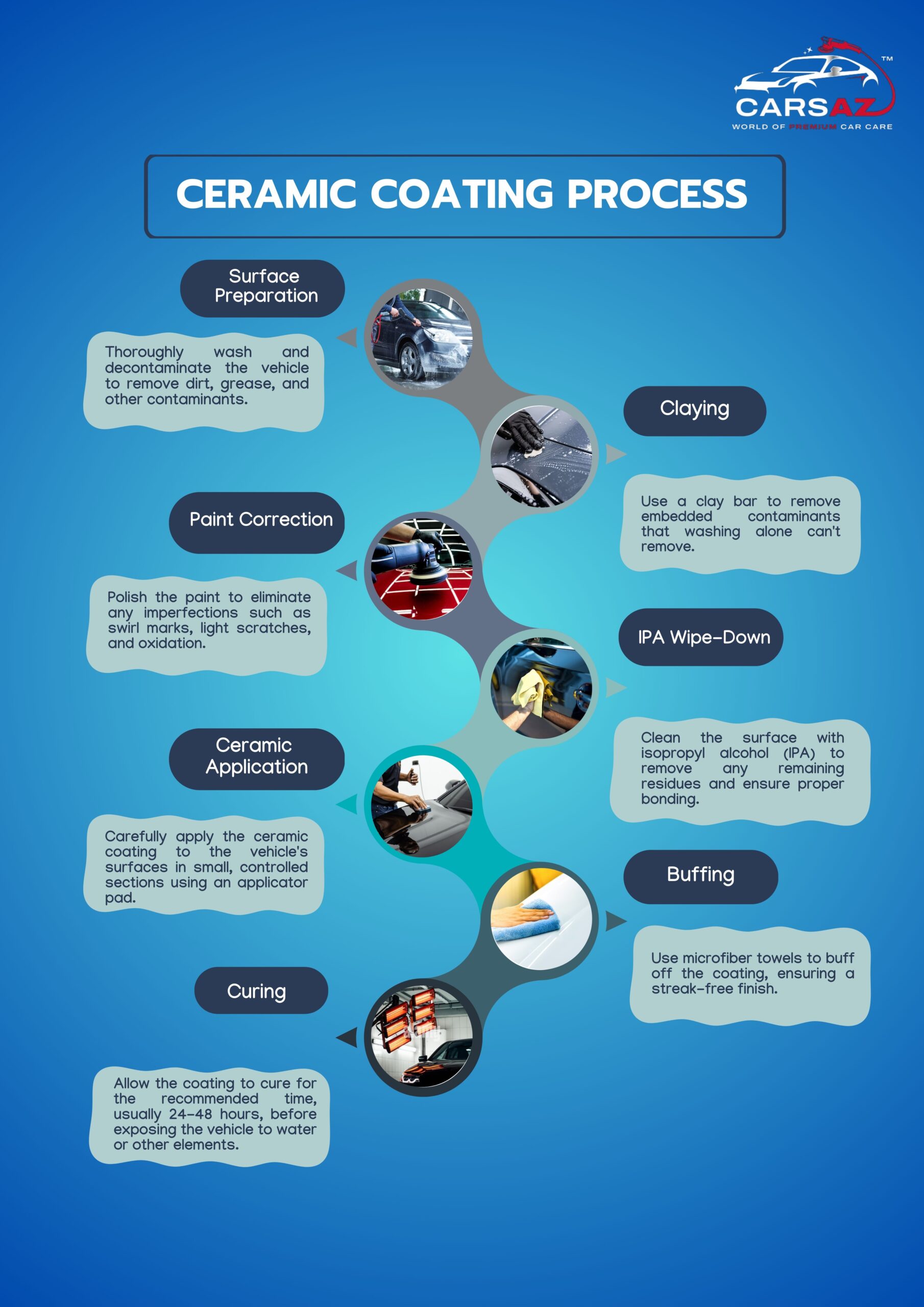
Step 1: Surface Preparation
The process begins with a thorough wash and decontamination of the vehicle to remove:
- Dirt
- Grease
- Road grime
- Oil-based residues
This ensures the surface is clean and ready for deeper treatment.
Step 2: Claying
Even after washing, embedded contaminants like tar, brake dust, and iron particles can remain. A clay bar treatment is used to pull out these microscopic impurities from the paint’s surface, making it perfectly smooth.
Step 3: Paint Correction
This is a critical step where the paint is machine-polished to:
- Remove swirl marks
- Eliminate light scratches
- Correct oxidation
- Enhance paint clarity and gloss
Paint correction ensures a flawless base for the coating to bond with.
Step 4: IPA Wipe-Down
After polishing, the surface is wiped with isopropyl alcohol (IPA) to remove:
- Any polishing oils
- Residual compounds
This ensures the ceramic coating bonds directly to the paint without interference.
Step 6: Buffing
After flashing, the coating is buffed off using premium microfiber towels to:
- Remove excess product
- Eliminate streaks
- Leave a high-gloss, uniform finish
Buffing is essential to ensure there’s no haze or unevenness in the coating.
Step 7: Curing
The final step is curing, where the vehicle is left for 24 to 48 hours before any exposure to:
- Water
- Dust
- Environmental elements
Many professional studios, like CarsAZ, use Infrared Lamps to accelerate the curing process for better bonding and hardness.
5. Ceramic Coating vs Wax vs PPF
| Feature | Ceramic Coating | Wax | Paint Protection Film (PPF) |
|---|---|---|---|
| Durability | 2–5 years | 1–2 months | 5–10 years |
| Protection from UV | ✅ | ✅ | ✅ |
| Scratch Resistance | Moderate | Low | High |
| Hydrophobic | ✅ | Moderate | ❌ |
| Gloss Enhancement | ✅✅ | ✅ | ✅ |
| Cost (Approx.) | ₹20,000 – ₹60,000 | ₹1,000 – ₹5,000 | ₹50,000 – ₹1,50,000 |
6. How Long Does Ceramic Coating Last?
The lifespan depends on:
- Product quality: Professional-grade coatings last longer than DIY ones.
- Maintenance: Regular washing and care can extend life.
- Environmental exposure: Harsh climates may reduce durability.
Most high-end ceramic coatings last between 2 to 5 years with proper care.
7. Maintenance Tips After Ceramic Coating
To keep your ceramic coating effective and shiny, follow these tips:
✅ Wash Regularly
Use a pH-balanced car shampoo.
Avoid harsh detergents and roadside washes.
✅ Dry With Microfiber Towels
Prevents water spots and swirl marks.
✅ Avoid Automatic Car Washes
The brushes can damage the coating.
✅ Use Ceramic Boosters
Every 3–6 months, apply a top-up spray for added gloss and hydrophobicity.
✅ Park in Shade or Covered Area
UV rays can still wear down the coating over time.
8. Is Ceramic Coating Worth It?
Short answer: YES — if you care about long-term appearance and protection.
While the initial cost is higher, ceramic coating:
- Preserves your car’s value
- Reduces frequent detailing costs
- Keeps your car looking premium for years
It’s a one-time investment for years of shine and protection.
9. Final Thoughts
Ceramic coating is more than just a luxury — it’s a smart investment for anyone who wants to maintain the beauty and value of their car. It offers unmatched protection, a deep glossy finish, and a hassle-free ownership experience.
Whether you drive a luxury SUV or a humble hatchback, ceramic coating ensures your vehicle looks stunning on every ride.
Frequently Asked Questions (FAQs)
✅ Yes, in fact, it’s best to apply it as soon as possible to protect the original paint.
✅ DIY kits are available, but professional application gives longer-lasting and better results.
❌ No. Polishing will remove the coating.
✅ Yes, some ceramic coatings are designed specifically for PPF films.
✅ It offers resistance to light scratches, but not protection from heavy impacts.